

Heritage Window Clean — Restored 1845 Former Chapel
Heritage · Window Cleaning
A former 1845 chapel, lovingly converted to a home, had tall windows clouded by years of village atmosphere. Gentle pure-water cleaning gave the rooms back their light — respecting the building's 19th-century character throughout.
Bringing the Light Back to a Former Chapel's Windows
A former 1845 chapel, lovingly converted to a home, had tall windows clouded by years of village atmosphere. Gentle pure-water cleaning gave the rooms back their light — respecting the building's 19th-century character throughout.
Heritage · Window Cleaning
SW-CASE-HW-HER-002
Thursday, 19 March 2020
Restored 1845 former chapel (now a private home)
North Buckinghamshire village · former Non-Conformist chapel
Tall chapel casement windows · 19th-century brickwork surrounds · historic glazing
The Pathology
Converted chapels keep tall, characterful windows set in 19th-century brickwork — generous glazing built to flood a place of worship with light. Over years, ordinary atmospheric soiling and a little algal film on the shaded reveals dull that glass and dim the rooms inside. It is surface soiling, not decay; the task is to lift it without harming historic glass, period frames or the soft brick surrounds.
χ Drag Factor
χ — demonstrative: moderate (tall exposed elevations)
Biomass / Taxon
Surface soiling; light algal film on shaded reveals
Atmospheric Log
Village setting; tall exposed elevations

The Method
Converted chapels keep tall, characterful windows set in 19th-century brickwork — generous glazing built to flood a place of worship with light. Over years, ordinary atmospheric soiling and a little algal film on the shaded reveals dull that glass and dim the rooms inside. It is surface soiling, not decay; the task is to lift it without harming historic glass, period frames or the soft brick surrounds.
A chapel was designed around its windows — tall, plentiful glazing to carry light into a hall of worship. When a chapel becomes a home, that light is its greatest asset, and clouded glass quietly steals it back. Cleaning here is less about appearance and more about restoring the very quality the building was built to give.
Nineteenth-century glass and frames deserve the same restraint as older fabric. We keep pressure and chemistry away from putty lines and brick reveals, lift the soiling from the glass itself, and leave the period detail untouched. The reward is a room transformed by daylight, with nothing of the building's history sacrificed for the shine.
A demonstrative model of our heritage-glazing method and standards — not a price list. Every historic property is assessed individually, with discretion, before any work or quotation.
FAQ
Are tall chapel windows safe to clean without scaffolding?
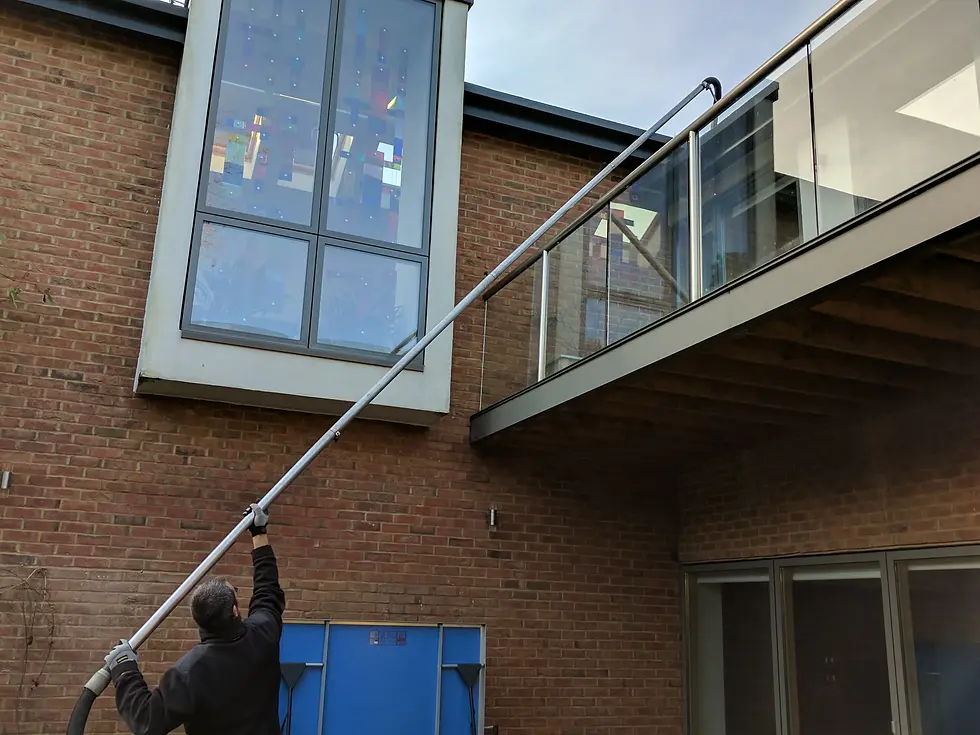
Yes — reached with WAHR-compliant powered access (a MEWP) operated to IPAF standards, with a documented method and rescue plan. The access is planned and recorded, so the work is safe and accountable, and the historic fabric is never put at risk.
Will pressure washing harm the old brickwork around the windows?
It can, which is why we don't use it near heritage brick. High pressure erodes soft 19th-century brick and lime joints. We clean the glass with pure water and a soft hand, keeping force well away from the surrounds.
Can you keep the building's character intact?
That's the whole point. We lift surface soiling and leave historic glass, frames and brick exactly as found — no renewal, no alteration. The character that makes a converted chapel special is preserved, just clearer and brighter.
Can you clean the windows while we are living in the building?
Yes. The work is external and low-disruption — pure water and a soft hand from outside — so daily life inside carries on as normal. We simply agree access and timing beforehand, and there is no mess, spray or intrusion into the rooms themselves.
How often should the windows of a converted chapel be cleaned?
It depends on aspect and exposure rather than a fixed calendar. Tall, sheltered elevations hold soiling longer, so most converted chapels settle into a twice-yearly rhythm, with shaded reveals reviewed each visit and the interval adjusted to what the building actually shows.
The RIsk To Your Asset
A converted chapel takes its value from light and from period fabric, and a single wrong method threatens both. Pressure and chemistry near nineteenth-century brick and putty lines erode soft masonry and open joints that then hold water against the wall. The exposure is not clouded glass — it is a cleaning decision that trades one day of brightness for years of accelerated decay in the surrounds.
Soft 19th-century brick · erosion under pressure
Putty lines · water driven into the joint
Material Substrate
We cleaned to the same conservation-led standard as any heritage fabric: pure water, low pressure, a soft hand, no abrasives, and no high-pressure jet anywhere near the brick surrounds or glazing seals. Tall elevations were reached with WAHR-compliant access — a MEWP operated to IPAF standards (operator IPAF-trained, renewal in progress). Each window was cleaned and checked individually; nothing of the building's character altered.
Pure water · low pressure, hand-detailed
WAHR-planned MEWP · IPAF standards
Specification / Dataset
Substrate: tall chapel casements · historic glazing · 19th-century brick surrounds
Soiling: atmospheric surface soiling; light algal film on shaded reveals
Method: pure water, low pressure, hand-detailed
Chemistry: neutral; none applied near putty lines or brick reveals
Access: WAHR 2005-planned powered access · MEWP operated to IPAF standards
Standards: conservation principles of BS 7913
Heritage gate: routine cleaning — character unaltered, no consent required
Verification: condition recorded before and after
OUR PROTOCOL
Tall chapel casement windows · 19th-century brickwork surrounds · historic glazing
BIOLOGICAL AGENT
Surface soiling; light algal film on shaded reveals
SITE / ENVIRONMENT
North Buckinghamshire village · former Non-Conformist chapel
FORENSIC DETAIL
Converted chapels keep tall, characterful windows set in 19th-century brickwork — generous glazing built to flood a place of worship with light. Over years, ordinary atmospheric soiling and a little algal film on the shaded reveals dull that glass and dim the rooms inside. It is surface soiling, not decay; the task is to lift it without harming historic glass, period frames or the soft brick surrounds.
OUTCOME
The tall windows were returned to full clarity and the rooms to their intended light, with historic glass, frames and brickwork left exactly as found. (Figures demonstrative pending the field-capture job sheet; condition recorded before and after.)
Your Built Environment
Diverse solutions tailored to your every need

Browse the Shop & Pricing
See every service with clear, upfront pricing — no hidden quotes. Add what you need to your basket and book it in a few clicks, whenever it suits you.

Create & Manage Your Account
Register a free account to manage your services, see past visits and rebook in seconds. Everything about your property's care, in one place.

View the Calendar
See when we're free and choose a date that works for you. Prefer a tailored quote first? Tell us what you need and we'll come straight back.
Book These Services Directly Online






Explore how we restore and protect other residential, commercial, and heritage properties using our evidence-based methods.


