

Commercial Window Cleaning — Working Spaces
Commercial · Window Cleaning
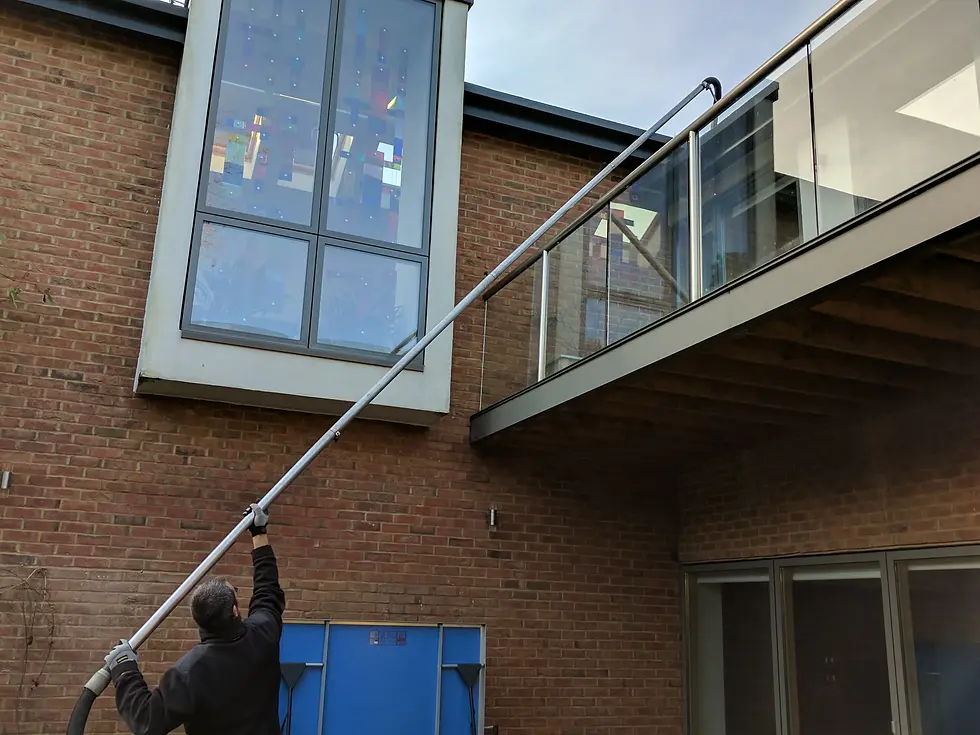
Across a working floor, filmed glass partitions and a hazed frontage were quietly stealing daylight — and with it, the brightness a workspace and its visitors rely on. A low-residue, out-of-hours clean restored clarity and transmitted light, with zero interruption to trading.
Restoring Lux to the Working Floor — Commercial Interior & Frontage Window Cleaning, Northamptonshire
Across a working floor, filmed glass partitions and a hazed frontage were quietly stealing daylight — and with it, the brightness a workspace and its visitors rely on. A low-residue, out-of-hours clean restored clarity and transmitted light, with zero interruption to trading.
Commercial · Window Cleaning
SW-CASE-WC-COM-001
Friday, 3 March 2017
Commercial premises (office / working spaces, non-listed)
Northamptonshire commercial premises · open-plan working spaces, glass partitions & frontage
Soda-lime float glass · internal glass partitions and screens · aluminium / uPVC framing · exterior frontage glazing
The Pathology
On a working floor the glass clouds from the building itself, not from cooking or living. HVAC distributes a fine particulate film, printers and photocopiers add a faint VOC condensate, and high-traffic doors and partitions collect static dust and handling marks. None of it is grime — it is a haze that scatters and absorbs transmitted daylight, dropping the light that reaches desks and dulling the frontage a visitor sees first.
χ Drag Factor
χ — demonstrative: low–moderate (HVAC-conditioned interior; high-traffic frontage)
Biomass / Taxon
None significant — HVAC particulate film, printer/photocopier VOC residue, high-traffic static dust and handling marks
Atmospheric Log
Conditioned interior; HVAC particulate distribution; high footfall; printer/copier VOCs


The Method
On a working floor the glass clouds from the building itself, not from cooking or living. HVAC distributes a fine particulate film, printers and photocopiers add a faint VOC condensate, and high-traffic doors and partitions collect static dust and handling marks. None of it is grime — it is a haze that scatters and absorbs transmitted daylight, dropping the light that reaches desks and dulling the frontage a visitor sees first.
On a working floor, glass does not gather the film of a home. It gathers the building's own by-products: a fine particulate distributed by the HVAC system, a faint condensate of VOCs off printers and photocopiers, and static-held dust at every high-traffic partition and door. Individually invisible, together they form a haze that scatters daylight before it ever reaches a desk.
That lost light matters more in a workplace than people assume. Daylight is a recognised driver of alertness, mood and circadian regulation, and a workforce under dimmed, artificially-lit conditions is more prone to lethargy and presenteeism. Restoring the glass restores the transmitted light the floor was designed to receive — a wellbeing intervention disguised as a clean.
There is an energy argument too. The less daylight a film lets through, the harder the building leans on artificial lighting to hold working light levels, and that lighting load feeds the wider electrical and cooling demand. Clear glazing lets a building use the free light it already has, easing reliance on the lighting budget rather than fighting its own windows.
The frontage carries a different value: it is the first thing a client, candidate or customer reads about the business. A filmed, hazy entrance quietly signals neglect before anyone is greeted; clear, bright glazing signals a business in control of its environment. On a commercial asset, presentation is part of the balance sheet.
The work is built around the working day, not against it. Cleaning is scheduled out of hours so partitions, screens and frontage are cleared while the floor is empty, and trading or working time is never interrupted. The premises are handed back ready to open, with no wet floors, no cordoned areas and no disruption to greet the first arrival.
Internal glass — partitions, meeting-room screens, balustrades — is cleaned with a low-residue method and soft media, protecting any applied films, manifestation or frosting rather than scouring them. Nothing is left for a cloth to drag around, which is the whole difference between glass that looks wiped and glass that genuinely transmits light again.
The exterior frontage is treated as the same asset from the other side: the film lifted, the glass rinsed to a residue-free finish, the framing and seals respected. Inside and out, the elevation is returned to full clarity so the daylight path through the building is unobstructed end to end.
For a facilities manager the result is measurable in the things that matter: a brighter floor, a sharper frontage, and a lighter call on artificial lighting — delivered on a schedule that never costs an hour of trading. That is what turns interior glass cleaning from a janitorial line item into a workspace-performance decision.
This case study is a demonstrative model of method and standards for commercial premises. It is not a price schedule; every site is assessed individually, with an out-of-hours plan and scope agreed before any work or quotation.
FAQ
Can you clean without disrupting our working day?
Yes — that is the default. Internal partitions, screens and frontage are cleaned out of hours, so the floor is cleared while empty and handed back ready to open. No wet floors, no cordons, no lost trading time.
Why does our office glass keep filming up?
On a working floor it is the building's own by-products — HVAC-distributed particulate, printer and photocopier VOCs, and high-traffic static dust — not household grime. A low-residue method removes the film itself, so the glass transmits light again rather than just looking wiped.
What does cleaner glass actually do for the business?
It restores transmitted daylight across the floor, which supports alertness and reduces reliance on artificial lighting, and it sharpens the frontage every visitor sees first. It is a wellbeing and presentation measure, not just a clean.
Will you protect our manifestation, frosting and applied films?
Yes. Internal glass often carries manifestation or privacy films, so we use low-residue solutions and soft media that lift the soiling without scouring or lifting those applied finishes.
Can this run as a scheduled SLA rather than one-offs?
Yes. Most commercial premises are best served by a scheduled interval matched to footfall and exposure, delivered out of hours, so the glazing is held at a consistent standard and the work is predictable for budgeting.
The RIsk To Your Asset
On commercial premises, dull glass is not cosmetic — it is an operating cost. A film across partitions and frontage cuts the daylight reaching the floor, and reduced daylight is well established to affect alertness, mood and presenteeism in a workforce, while a hazed frontage undermines the first impression every visitor forms. Less transmitted light also leans the building harder on artificial lighting. Treating the glazing as a working asset protects both the people and the energy budget.
Reduced daylight · workforce presenteeism
Frontage film · client impression
Material Substrate
Out-of-hours, low-residue cleaning planned around the working day, not against it. Internal glass partitions, screens and the exterior frontage are cleared while the floor is empty, using soft media and a low-residue method that protects manifestation, frosting and applied films rather than scouring them. No abrasives, no harsh solvents that could mark frames or coatings. The premises are handed back ready to open — no wet floors, no cordons, no interruption to trading or working hours.
Out-of-hours · zero disruption
Low-residue · clarity restored
Specification / Dataset
Setting: commercial working spaces — open-plan floor, glass partitions and frontage.
Soiling: HVAC particulate film, printer/copier VOC residue, high-traffic static dust and handling marks.
Method: out-of-hours, low-residue hydrodynamic clean; internal partitions + exterior frontage.
Disruption: zero interruption to trading / working hours.
Outcome: transmitted daylight (visible light transmittance) and presentation restored; verified elevation-by-elevation.
OUR PROTOCOL
Soda-lime float glass · internal glass partitions and screens · aluminium / uPVC framing · exterior frontage glazing
BIOLOGICAL AGENT
None significant — HVAC particulate film, printer/photocopier VOC residue, high-traffic static dust and handling marks
SITE / ENVIRONMENT
Northamptonshire commercial premises · open-plan working spaces, glass partitions & frontage
FORENSIC DETAIL
On a working floor the glass clouds from the building itself, not from cooking or living. HVAC distributes a fine particulate film, printers and photocopiers add a faint VOC condensate, and high-traffic doors and partitions collect static dust and handling marks. None of it is grime — it is a haze that scatters and absorbs transmitted daylight, dropping the light that reaches desks and dulling the frontage a visitor sees first.
OUTCOME
Internal partitions and frontage glazing were returned to clear, streak-free transmission and the working floor to its intended daylight, checked elevation-by-elevation. Work was carried out of hours with no interruption to trading. (Figures demonstrative pending the field-capture job sheet — pane/elevation schedule and clean interval to be entered before publication.)
Your Built Environment
Diverse solutions tailored to your every need

Browse the Shop & Pricing
See every service with clear, upfront pricing — no hidden quotes. Add what you need to your basket and book it in a few clicks, whenever it suits you.

Create & Manage Your Account
Register a free account to manage your services, see past visits and rebook in seconds. Everything about your property's care, in one place.

View the Calendar
See when we're free and choose a date that works for you. Prefer a tailored quote first? Tell us what you need and we'll come straight back.
Book These Services Directly Online






Explore how we restore and protect other residential, commercial, and heritage properties using our evidence-based methods.


