
Your Environment
Your Science
Your Rights
The Encyclopedia of UK Building Safety, Ecology & the Built Environment — bridging the legal accountability of the Building Safety Act 2022 with the biological reality of the structures we inhabit. We created this page to bring together many topics of interest and to connect distinct building sciences and ecology together.
Every citizen deserves to be safe, and their building to be fundamentally healthy, in the place they call home. This encyclopedia synthesises the United Kingdom's rigorous statutory safety frameworks, advanced thermodynamic building science, and the critical path to Net Zero. A building is not an inert box — it is a thermodynamic and biological system.
Part I — What is the Built Environment?
The built environment refers to all human-made surroundings that provide the setting for our daily activities — buildings, roads, bridges, water systems, power networks, schools, hospitals, housing and urban spaces. It is the complex nexus where engineering, architecture, planning, construction, ecology and regulation converge to shape how society lives and functions.
~25% — of UK carbon emissions from the built environment (UKGBC)
~50% — of those emissions from existing housing stock
2050 — legally binding UK Net Zero target
≥18 m — height defining a Higher-Risk Building
Part II — The UK Regulatory, Institutional & Scientific Framework
The built environment is governed by an evolving matrix of statutory laws, building regulations and professional standards designed to protect public health, safety and structural integrity — enforced by authorities such as the Health and Safety Executive (HSE) and Local Authority Environmental Health Officers, and guided by the British Standards Institution (BSI).
Updated, July 2026: the Building Safety Regulator no longer sits within the HSE. It became a standalone regulator sponsored by MHCLG on 27 January 2026 — a step toward the single construction regulator recommended by the Grenfell Inquiry.
Building Safety Regulator (BSR) — Created by the Building Safety Act 2022 after the Grenfell Inquiry. Now a standalone body sponsored by MHCLG (since 27 Jan 2026). Powers to halt construction, levy unlimited fines, and hold directors criminally liable — with a stringent focus on Higher-Risk Buildings.
UK Centre for Moisture in Buildings (UKCMB) — Independent body developing the science for a moisture-safe built environment. Co-authors technical standards (e.g. BSRIA BG 90) so the push for airtight homes does not create trapped moisture and interstitial condensation hazards. ukcmb.org
British Damage Management Association (BDMA) — Launched 1999; the certifying body for the recovery and restoration industry, regulating practitioners through a tiered professional accreditation — the closest existing precedent for a scientific fabric-maintenance discipline.
Chartered Institute of Building (CIOB) — Governs the science, logistics and management of physically assembling the building — the how-it-is-built authority.
Chartered Institution of Building Services Engineers (CIBSE) — The definitive authority for thermodynamic building science: airflow, MVHR, heat pumps, indoor air quality, dew points and condensation — the standards that determine whether a building breathes or suffocates.
Institute of Historic Building Conservation (IHBC) — The gold standard for heritage and listed work, wielding Guillitte's concept of bioreceptivity as a legal shield so predictive, non-destructive methods dictate interventions rather than aggressive chemical washes.
Engineering Council (EngC) — The overarching regulator for the engineering profession, awarding Chartered Engineer (CEng) status.
ARB & RIBA — The statutory Architects Registration Board and the Royal Institute of British Architects together govern design standards.
Royal Institution of Chartered Surveyors (RICS) — The primary body for quantity surveyors, valuation and cost management — flagging fabric defects that then require remediation.
RTPI · APM · IOSH — The chartered bodies for town planning, project management and occupational safety respectively — the professional rigour imported into competent maintenance.
Part III — The 2025–2050 Carbon Footprint & the Circular Economy
Under the Climate Change Act 2008, the UK holds a legally binding target to reach Net Zero greenhouse-gas emissions by 2050. According to the UK Green Building Council's Net Zero Whole Life Carbon Roadmap, the built environment directly accounts for roughly 25% of the UK's total carbon emissions.
The carbon-footprint strategy
The industry is moving beyond operational carbon (heating and lighting) to Whole Life Carbon, which restricts the massive upfront embodied carbon of manufacturing materials and construction. Approximately half of the built environment's emissions stem from existing housing stock — so the 2050 target is a mathematical impossibility without a national retrofitting programme.
Corrected, July 2026: the minimum-standard trajectory is now EPC C for privately rented homes in England by 1 October 2030 under the Warm Homes Plan — not 2028, and owner-occupied homes are not in scope. A proposed phase-out of new gas and oil boiler sales by 2030 also forms part of the roadmap.
The UK manages this trajectory through statutory five-yearly Carbon Budgets. The Seventh Carbon Budget (CB7) — covering the period to 2042 — is now in law, passed on 24 June 2026 (Climate Change Committee).
The circular economy
Traditional construction runs on a linear take–make–dispose model. The circular economy demands that assets extract maximum value before materials are recovered. The UKGBC states that maximise reuse is the most effective way to reduce embodied carbon. Aggressively chemical-washing a building to improve its aesthetic prematurely erodes the substrate, forcing early facade replacement — the opposite of sustainability. True durability requires self-maintaining, moisture-safe design that prevents premature decay.
Part IV — Your Environment, Your Science: Resident Rights & Safety
If you reside in a high-rise building in England — legally, a Higher-Risk Building: 18 metres or seven or more floors, containing at least two residential units — you are protected by rights under the Building Safety Act 2022.
The BSR regulates building-safety risks — specifically the dangers of structural failure and fire spread. The ecological safety of the building fabric — mould, damp and biological decay — is a shared civic responsibility that demands equal scientific rigour.
Check if your building is registered
Use the BSR public register to confirm your high-rise building is officially registered → Find a high-rise residential building.
Your building's accountable person(s) must:
Provide comprehensive safety information about your building in accessible formats.
Create a Residents' Engagement Strategy (RES) to listen to your concerns.
Provide a clear, formal process for raising concerns about fire, structural or ecological-envelope safety.
Your responsibilities as a resident:
Know emergency procedures and fire-safety information.
Never remove or interfere with safety items — fire doors, signs, sprinklers or extinguishers.
Report any issues to your building manager immediately.
Allow your accountable person access to assess and manage building-safety risks.
Raising a concern — escalating to the Building Safety Regulator
Contact your Principal Accountable Person first. You may escalate directly to the BSR if your PAP has no policy to raise concerns, if you feel unsafe raising it with them, or if your building is missing from the register.
Contact the BSR online via GOV.UK, or by telephone on 0300 790 6787 (Mon, Tue, Thu, Fri 8:30am–5pm; Wed 10am–5pm; closed weekends and bank holidays; translation services available).
To stay informed, residents can join the BSR's Residents' Panel, access free training for resident-managed buildings via The Leasehold Advisory Service (LEASE), and sign up for the Your Home, Your Safety newsletter.
Part V — Roles & Responsibilities in the Built Environment
The Building Safety Act 2022 introduced stringent legal duties across every phase of a building's lifecycle.
Clients — The person or organisation (developer, housing association, local authority) for whom the building work is done.
Principal Designers — Appointed by the client to manage and oversee design, ensuring compliance with the Approved Documents.
Principal Contractors — The organisations carrying out construction — site supervisors, structural engineers, installers and envelope specialists.
Building Control Profession — Registered Building Inspectors (RBIs) and Registered Building Control Approvers (RBCAs), who must be registered with the BSR under the Building Act 1984.
Accountable Persons (AP) — Legally responsible for repairing and maintaining the common parts of an occupied high-rise building, including the exterior structure.
Principal Accountable Person (PAP) — Holds ultimate responsibility for registering the building and preparing the Safety Case Report.
Part VI — The A–Z of Building Safety & Ecology
All Reasonable Steps — The legal threshold actions an AP must take to prevent and mitigate building-safety risks in an HRB.
Approved Documents — Statutory guidance on meeting building regulations. Document A covers structure; Document B covers fire safety (facades, cladding, balconies).
Building Assessment Certificate (BAC) — Issued by the BSR when satisfied that APs are meeting their duties on fire spread and structural failure.
Bioreceptivity — Guillitte's concept describing a surface's intrinsic susceptibility to biological colonisation — the scientific heart of "the wrong clean makes it worse".
Cladding & External Wall System (EWS) — The outer wall system, now subject to Fire Risk Appraisals of External Walls (FRAEW) under PAS 9980:2022.
Gateways (1, 2, 3) — The BSR's hard-stop checks: planning (One), pre-construction (Two), and post-construction hand-over of the Golden Thread before occupation (Three).
Golden Thread — The mandatory, continuous digital record of a building's safety information across its lifecycle.
MOR / VOR — Mandatory and Voluntary Occurrence Reporting — systems ensuring risks or events that could cause significant harm are reported to the regulator.
Remediation — Correcting safety defects, enforced by the Remediation Enforcement Unit (REU) and often funded via the Building Safety Fund (BSF).
Safety Case Report (SCR) — A report demonstrating that the AP has identified building-safety risks and taken all reasonable steps to mitigate them.
The Regulatory Void — the myth of the qualification vs. the right to sign off
The United Kingdom is currently placing the burden of disconnected building science entirely upon the tenant, the leaseholder, and the business that rents or owns the building. The UK must urgently bring the science of ecology into building science.
Yet we face a profound regulatory void. There are currently no training programmes, no qualifications, no specialised education, no college courses and no university placements for becoming a Scholar-Ecologist who scientifically maintains the exterior building envelope.
Survey the landscape of building science and you will find highly qualified graduates — from Bachelors to PhDs in Physics, Geography, Mathematics, Sociobiology, Geology, Anthropology and Pedagogics — all scratching their heads and asking the same question: who is going to do all this cleaning? And how, without any dedicated training, education or qualification? If these ecological practitioners do not exist, who does a heritage-management company actually hire? How does the public learn these protective measures? Who is going to scientifically clean the moisture, the carbon particulates and the mould from every wall in the United Kingdom — without destroying the substrate beneath it?
This is a problem that, currently, has no answer.
Anthrotectonic Hylodynamics
My Items

The statutory Architects Registration Board and the Royal Institute of British Architects together govern design standards.


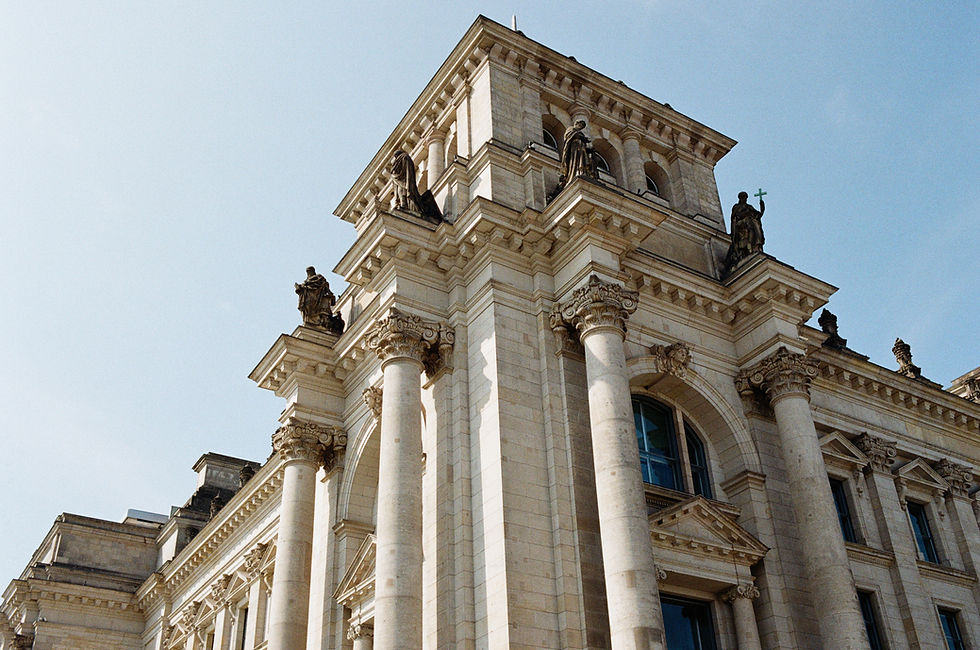

Independent body developing the science for a "moisture-safe built environment." Co-authors technical standards (e.g. BSRIA BG 90) so the push for airtight homes does not create trapped moisture and interstitial condensation hazards. ukcmb.org