
Red Brick Driveway Cleaning: Moss, Weed, and Dirt Removal
Residential · Block Paving Cleaning & Joint Reinstatement
Moss and weed had taken the joints of a red brick drive while the blocks themselves were sound. Cleared to depth and re-sanded, because on block paving the joint is the job.
The Joints Are the Job — Red Brick Driveway Cleaning
Moss and weed had taken the joints of a red brick drive while the blocks themselves were sound. Cleared to depth and re-sanded, because on block paving the joint is the job.
Residential · Block Paving Cleaning & Joint Reinstatement
SW-CASE-PW-RES-005
Thursday, 27 April 2017
Residential block paved driveway (non-listed)
Suburban residential frontage · open aspect · daily vehicle traffic
Red concrete block paving · kiln-dried sand joints
The Pathology
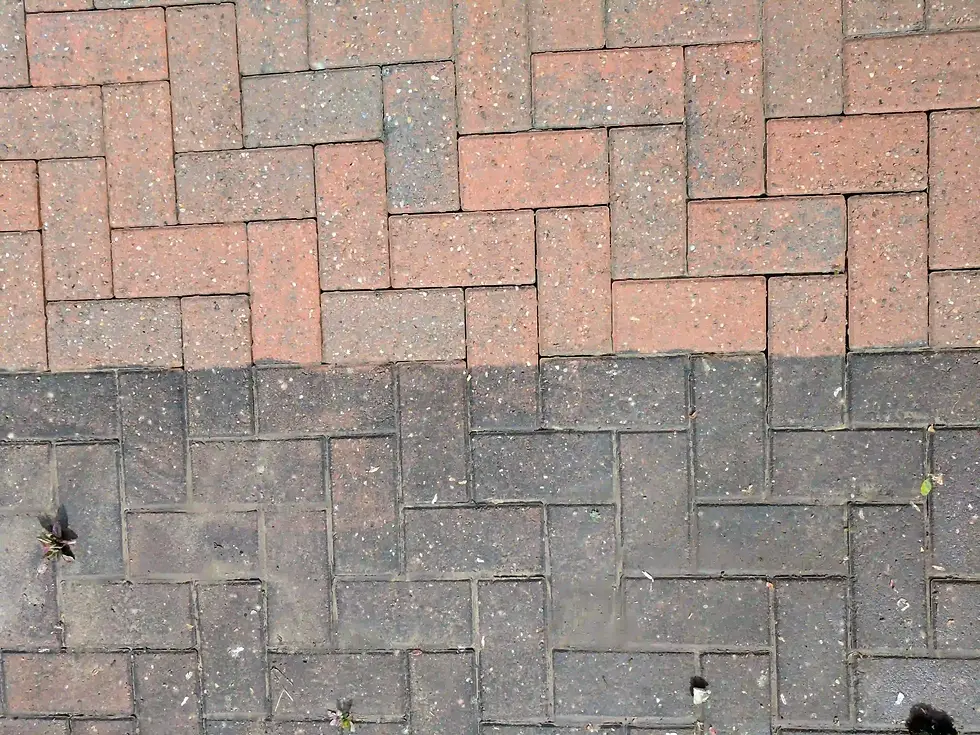
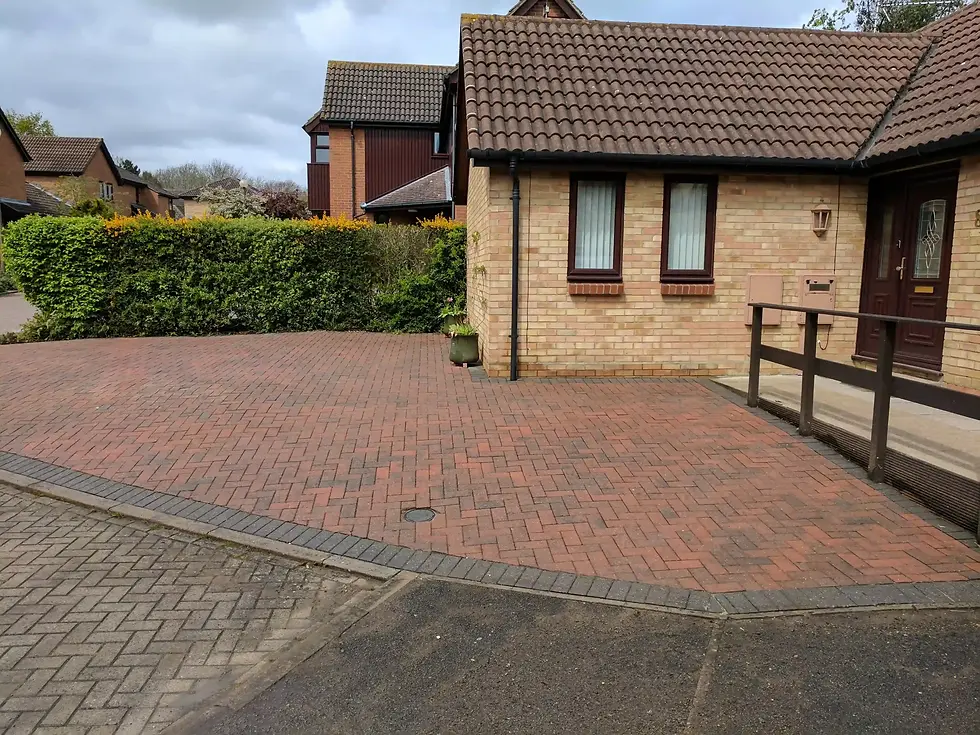
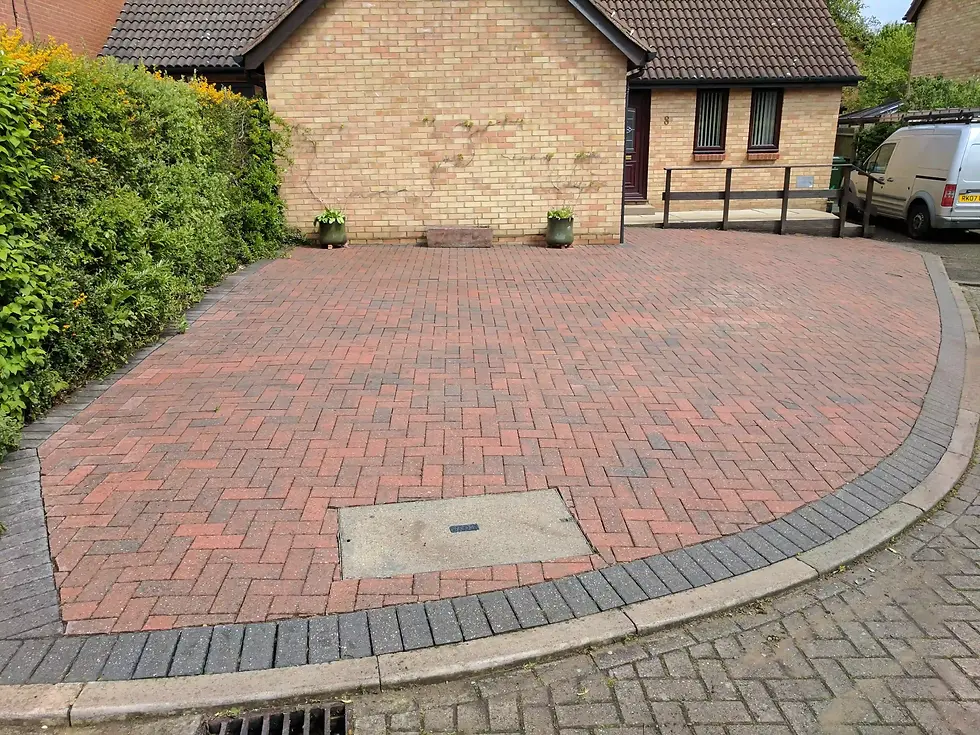
The blocks were in good order. Everything wrong with this drive was in the gaps between them. Years of windblown seed, leaf fragments and road dust had collected in the joints, and as the original kiln-dried sand washed and blew out, that debris took its place — a thin, damp, organic seed bed running the whole grid of the drive. Moss took it first, weeds followed, and a general algal film sat across the block faces on top of it.
χ Drag Factor
χ — demonstrative: moderate (joint sand depleted, organic debris accumulated, open colonisation)
Biomass / Taxon
Joint moss · annual and perennial weed growth · surface algal film
Atmospheric Log
Open frontage; windblown seed and organic debris deposition into open joints
The Method
The blocks were in good order. Everything wrong with this drive was in the gaps between them. Years of windblown seed, leaf fragments and road dust had collected in the joints, and as the original kiln-dried sand washed and blew out, that debris took its place — a thin, damp, organic seed bed running the whole grid of the drive. Moss took it first, weeds followed, and a general algal film sat across the block faces on top of it.
People tend to describe this job by the colour. A red brick drive that has gone dull and green reads as tired in a way a grey one somehow does not, because red is a colour you notice losing. So the conversation usually starts with the blocks. It almost never starts with the gaps between them, which is a pity, because on block paving the gaps are where the entire problem lives.
Here is the thing most people have never been told, and it changes what the sensible response is. The joints between your blocks are not empty and they are not soil. They are supposed to be full of kiln-dried sand, which is graded, sharp and deliberately sterile. Over the years that sand washes out in rain and blows out in wind, and the space it leaves fills with whatever the weather delivers — seed, leaf fragments, road dust, bird droppings. That is not dirt collecting on a driveway. That is a seed bed assembling itself, in a grid, across the whole surface.
Which is why pulling the tops off does very little. Take a weed out at surface level and you have removed the visible plant and left the thing that grew it, complete with a root fragment and a few thousand seeds in the material around it. The drive looks clear for a fortnight and then repeats, and the customer concludes that weeds are simply inevitable. They are not inevitable. They are being re-sown by the material sitting in the joint.
So the joint has to be cleared to depth, and that is what the machine is actually for. The flow reaches down into the gap and brings the growth out along with the material it was rooted in — which means a fair amount of wet debris ends up spread across the drive before it is swept and rinsed away. That is simply how the work goes. What matters is whether the joint is genuinely emptied or only skimmed, and skimming is quicker.
And then the sand goes back, which is the step that gets skipped. Kiln-dried sand is not a cosmetic finish, it is structural. Block paving holds together by interlock: each block wedged against its neighbours, load spread sideways through the whole field rather than borne by any one unit. The sand is what supplies that wedge. A drive cleaned and left unsanded looks excellent for a season and then starts to move, and moving blocks are a relay, not a clean.
It also has to go back at the right moment, which is not the same day. Sand poured into a damp joint clumps at the top and never reaches the bottom, so the first rain takes most of it straight out again and everybody concludes that re-sanding does not work. It wants a dry surface and a dry joint, which in this country usually means coming back rather than finishing the job in one visit. That is not us being precious; it is the difference between the sand staying and the sand leaving.
Now the part worth being honest about, because this job did not end the way we would have chosen. This was a customer of several years who had come to us from a company they were unhappy with. Some time after the driveway, that company knocked on their door and quoted well below what we charged. We were asked to match it. We said no, and we lost the customer — back to the provider they had left in the first place.
We did not match it because we could not have done the work at that number and still done it properly. That is the whole calculation, and it is not about pride. A price is a statement about how long somebody can afford to spend on your property, what they can afford to put back into it, and whether they can afford to return if something is not right. Set it low enough and the answer to all three is no, and the corner that gets cut stops being chosen by judgement and starts being chosen by the clock.
None of which is a criticism of anyone who takes the cheaper quote. From a doorstep there is usually no way to tell the difference, because the difference does not show up on the day — it shows up in the second year, when the joints were never re-sanded, the weeds are back on the same cycle, and the surface has been worked a little harder each visit to make up for the time nobody was paid to spend. By then the saving has generally been spent twice. We would rather say that plainly and lose the work than win it and become the thing the customer was unhappy about to begin with.
This case study is a demonstrative model of our method and standards. It is not a price list; every drive is assessed on its blocks, its joints and its condition before any figure is discussed.
FAQ
Where do the weeds in my block paving actually come from?
From the joint, not from underneath. The blocks and sub-base seal the ground off. Seed lands on top, falls into the gap, and roots in the debris that has replaced the jointing sand. That is why clearing the joint matters more than spraying.
Why does the sand need replacing after a clean?
Because it is structural, not decorative. Block paving holds together by interlock, and the sand is the wedge between each block. Without it the blocks start to move, and a drive that needed cleaning ends up needing relaying.
Can you re-sand on the same day as the clean?
Not properly. Sand put into a damp joint clumps near the top and never beds down, so the first rain washes it straight back out. It needs a dry surface and a dry joint, which usually means a return visit.
Will weedkiller keep my driveway clear?
It kills the plant but leaves the seed bed, so growth returns on the same cycle and you treat again. Clearing the organic debris out of the joint and refilling with clean sand removes what the weeds are growing in.
Why is your quote higher than the one I have been given?
Usually because of time. Clearing joints to depth and returning to re-sand takes considerably longer than passing a machine over the top. We would rather explain the difference than quietly leave those steps out.
The RIsk To Your Asset
Block paving is not a surface glued into place; it holds together because each block is wedged against its neighbours, and kiln-dried sand in the joints is what supplies that wedge. Lose the sand and the blocks begin to shift, the edges take load they were never meant to take, and a drive that needed cleaning ends up needing lifting and relaying. Which is why aggressive jointing work is a false economy — anything that blasts the joint out faster than it clears the debris is trading a cosmetic gain for a structural cost, and the bill arrives years later if left. Our advice is always to re-sand block paving, and it remains the customer's choice of service.
Joint sand lost · interlock and bedding compromised
Weedkiller alone · the seed bed stays where it is
Material Substrate
A rotary flat surface cleaner did the clearing, with a lance at distance to edges, kerbs and returns. The flow lifts moss and weed out of the joints together with the debris they rooted in, and spreads a good deal of it across the drive on the way — so the whole surface is swept and rinsed down afterwards. That same pass takes out whatever jointing sand was left, which is why fresh kiln-dried sand goes back once the blocks have dried through.
Joints cleared to depth · not just the tops taken off
Re-sanded after drying · not the same day
Specification / Dataset
Substrate: red concrete block paving · kiln-dried sand joints
Loading: joint moss · annual and perennial weed growth · accumulated organic debris in joints · surface algal film
Condition finding: original jointing sand substantially depleted and replaced by windblown organic debris
Sequence: field machined to clear joints to depth · edges and returns lanced at distance · surface swept and rinsed of displaced debris
Mechanical: rotary flat surface cleaner across the field · lance at distance to edges, kerbs and returns
Pressure: matched to block face — sufficient for the film, not enough to erode the surface fines
Reinstatement: joints refilled with fresh kiln-dried sand once the blocks had dried through
Aftercare issued: keep the joints clear of leaf litter and soil; re-sand as it depletes
Figures: demonstrative — area, timings and re-clean interval to be field-captured
OUR PROTOCOL
Red concrete block paving · kiln-dried sand joints
BIOLOGICAL AGENT
Joint moss · annual and perennial weed growth · surface algal film
SITE / ENVIRONMENT
Suburban residential frontage · open aspect · daily vehicle traffic
FORENSIC DETAIL
The blocks were in good order. Everything wrong with this drive was in the gaps between them. Years of windblown seed, leaf fragments and road dust had collected in the joints, and as the original kiln-dried sand washed and blew out, that debris took its place — a thin, damp, organic seed bed running the whole grid of the drive. Moss took it first, weeds followed, and a general algal film sat across the block faces on top of it.
OUTCOME
Moss and weed removed with their rooting material rather than only their top growth, the block faces cleared of algal film, and the joints refilled with clean sand. The drive was returned to a maintained condition rather than a rescued one. Figures demonstrative — area and timings to be field-captured.
Your Built Environment
Diverse solutions tailored to your every need

Browse the Shop & Pricing
See every service with clear, upfront pricing — no hidden quotes. Add what you need to your basket and book it in a few clicks, whenever it suits you.

Create & Manage Your Account
Register a free account to manage your services, see past visits and rebook in seconds. Everything about your property's care, in one place.

View the Calendar
See when we're free and choose a date that works for you. Prefer a tailored quote first? Tell us what you need and we'll come straight back.
Book These Services Directly Online






Explore how we restore and protect other residential, commercial, and heritage properties using our evidence-based methods.


